A Place on the List Is Not a Passport: Reading the UK CBD Novel Food Register
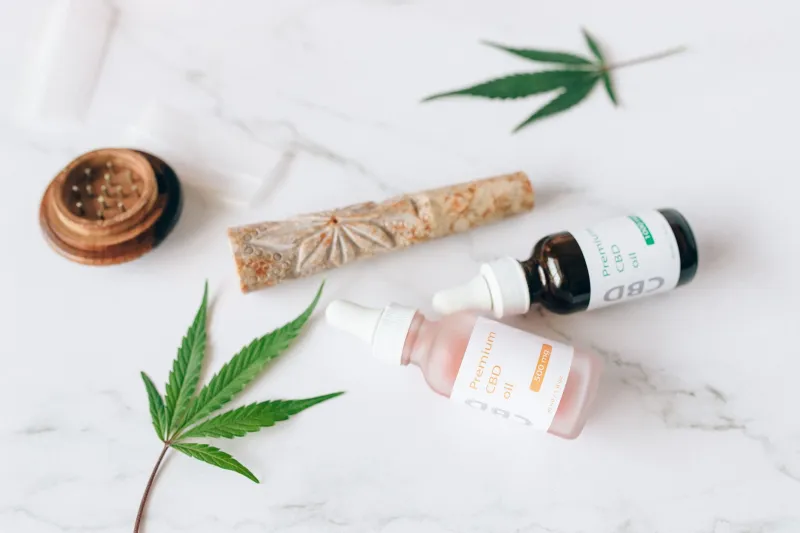
Photo: UK food safety documents with CBD product label and laboratory certificate, via s3.amazonaws.com
Few phrases carry more weight in UK CBD marketing than ‘on the Novel Food list’. It sounds like a seal of approval. In practice, the register is a regulatory checkpoint, not a certificate of safety, potency or provenance. As of November 2026, buyers still need to understand what a listing does and does not prove.
Application, evaluation and authorisation are not the same
Under the UK novel food regime, a food that was not consumed to a significant degree before May 1997 must be authorised before it can be marketed. CBD extracts have been treated as novel foods, which is why the sector has spent years in the application process. The Food Standards Agency (FSA) maintains a public list of CBD products linked to applications that have been accepted for evaluation. That list is useful: it helps buyers and enforcement bodies see which products are in the system. It is not the same as an authorisation.
An application is a request. Acceptance for evaluation means the regulator has taken the application into the assessment process. Authorisation is the end point, granted after a safety assessment and with any conditions attached. A public listing therefore sits somewhere between paperwork and approval. It should not be read as ‘approved’, ‘safe’ or ‘compliant in every respect’.
Product-specific entries and ingredient-level references
The register is not uniform. Some entries identify a product by brand, name, strength or pack format. Others refer to a CBD ingredient, an applicant or a range. A product-specific entry is more informative because it can be checked against the exact item on the shelf. An ingredient-level reference is broader: it may show that a particular CBD extract is associated with an application, but it does not certify every finished oil made from it.
That distinction matters in a market where brands change formulations, strengths and flavours. A listed 10ml oil is not a blanket approval for a 30ml version, a new flavour or a different batch. Buyers should check the exact product name, the strength and the applicant named on the list. If a retailer’s claim is vague — ‘our CBD is on the FSA list’ — ask which product, which entry and which reference.
How to check the register without overreading it
Start with the exact product name and brand. Search the public list for the closest match, then note whether the entry is product-specific or ingredient-level. Record the application reference and the status shown. Compare the label details with the entry: strength, volume, CBD source and any stated conditions. If the retailer cannot connect the bottle in front of you to a specific entry, the claim is weaker than it sounds.
Then do the separate work that the register cannot do. Ask for a batch-specific certificate of analysis from an accredited laboratory. Check that the batch number matches the bottle. Look at cannabinoid potency, THC content and contaminant testing. Ask where the hemp was grown, how it was extracted and how the finished oil was handled. These are the questions that connect a register entry to the product in your hand.
What the list cannot prove
A Novel Food listing does not confirm that a batch contains the cannabinoids stated on the label. It does not confirm that a product is free from pesticides, heavy metals or residual solvents. It does not verify the accuracy of a serving suggestion or the performance of a dropper. It does not establish farm-level provenance. And it does not transfer a product ‘off the hook’: food law, labelling rules and safety obligations continue to apply.
This is where the phrase ‘on the register, off the hook’ fails. Being listed may show that an application exists; it does not show that the finished product has been tested to the standard a buyer might assume. The register is an administrative tool. The COA is a batch-level document. Provenance records are a supply-chain document. They answer different questions.
An opinion: compliance is a stack, not a badge
The sensible buying position is to treat the Novel Food list as one layer in a stack of evidence. It is a useful first filter, particularly when a product-specific entry can be matched to the exact item. But it should never be the only filter. A brand that is precise about its register entry and open about its batch testing is more convincing than one that uses ‘FSA listed’ as a substitute for detail.
UK buyers should also be wary of the reverse error: dismissing the register altogether. The list has a purpose. It shows that a product is in a regulatory process and gives buyers a reference point. The mistake is to confuse presence with proof.
Questions worth asking a UK CBD seller
- Is this exact product on the FSA public list, and what is the application reference?
- Is the entry product-specific or ingredient-level?
- Does the label match the name, strength and volume in the entry?
- Can you provide a batch-specific COA from an accredited laboratory?
- Does the COA match the batch number on the bottle?
- What contaminants were tested, and what were the limits?
- Where was the hemp grown, and how was the oil extracted?
- Are potency and serving figures based on the finished batch or a general formulation?
A listing can start a conversation. It cannot finish the due diligence. For UK CBD buyers in 2026, the register is worth checking — provided it is checked for what it is.