The Clinical Adjective Problem: Reading ‘Pharmacy-Grade’ Claims on UK CBD Products

Photo: Dietmar Rabich, CC BY-SA 4.0, via Wikimedia Commons
Few phrases in CBD marketing do more work with less definition than ‘pharmacy-grade’. It sounds clinical, controlled and quietly authoritative. For a UK buyer trying to distinguish a careful supplier from a careless one, it is tempting to treat the phrase as a shortcut. The difficulty is that, in the context of consumer CBD products, it is not a statutory grade that a label can simply claim.
That does not mean every brand using the phrase is acting in bad faith. It may be trying to signal manufacturing standards, testing discipline or clean facilities. But the buyer should treat the phrase as an invitation to ask for evidence, not as evidence in itself.
Where the phrase sits in UK regulation
In the UK, CBD products are generally sold as food supplements or cosmetics, and they may be medicines only where a product has been licensed as such. The legal category matters because it governs what claims can be made and what assurances a buyer can reasonably infer. A product that is not a licensed medicine cannot be presented as one, however clinical its packaging may appear.
‘Pharmacy-grade’ is not a recognised legal category for CBD consumer products. The existence of pharmacies, pharmacy medicines and professional regulation does not create a general product grade that any CBD brand can adopt. Unless a supplier defines the term precisely and supports it with documentation, it remains marketing language. That is the central problem: the adjective borrows credibility from a regulated setting without necessarily importing the obligations of that setting.
What the phrase can reasonably suggest
At its best, ‘pharmacy-grade’ may be shorthand for a supplier’s internal quality posture. It might indicate that biomass was tested, that extraction was controlled, that premises were cleaned to a stated standard or that finished products were released against a specification. These are meaningful ideas. They become useful to buyers only when they are converted into verifiable details.
At its worst, the phrase implies a level of regulatory approval that does not exist. It can encourage readers to assume clinical efficacy, pharmacy availability or medicinal status without any of those things being true. The responsible approach is to separate the reassuring word from the underlying claim.
Claims that need evidence, not atmosphere
A label or website may use related phrases such as ‘medical-grade’, ‘pharmaceutical-grade’, ‘clinically proven’ or ‘prescribed by pharmacists’. Each should be read carefully. Therapeutic claims are particularly sensitive: a CBD product should not suggest it treats, prevents or cures a condition unless it is licensed to do so. ‘Clinically proven’ should point to specific evidence, not a general impression of clinicality.
Buyers should also look for precise cannabinoid claims. A potency figure is only meaningful if it is tied to a batch and a laboratory result. The same applies to THC content and contaminant testing. A clinical adjective cannot substitute for a certificate of analysis.
Documents worth requesting
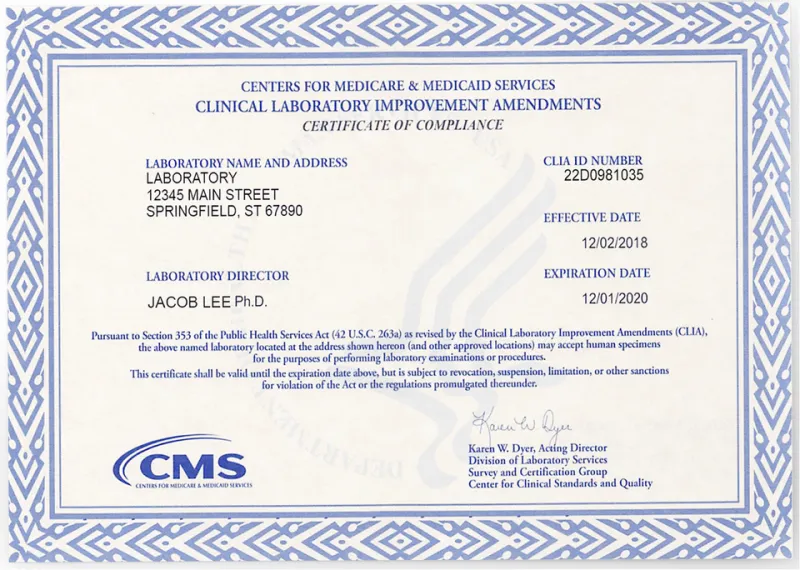
Instead of asking whether a product is ‘pharmacy-grade’, ask what documents support the quality claim. A batch-specific certificate of analysis is the starting point. It should match the product batch code and should come from a laboratory with relevant accreditation, such as ISO/IEC 17025 for the tests concerned.
The certificate should cover cannabinoid potency and, where appropriate, contaminants such as heavy metals, pesticides, microbials, mycotoxins and residual solvents. The supplier should be able to explain the extraction method, the biomass source and the relationship between the tested sample and the finished product. If the product is sold as a food supplement, novel food status is also relevant. If the company makes therapeutic claims, the regulatory basis for those claims should be clear.
A buyer’s checklist
- Does the label or website define what ‘pharmacy-grade’ means?
- Is there a batch-specific certificate of analysis?
- Does the batch code on the certificate match the product?
- Is the laboratory accredited for the tests shown?
- Are cannabinoid, THC and contaminant results reported clearly?
- Is the UK biomass origin supported by batch-level traceability?
- Are therapeutic claims avoided unless the product is licensed?
- Is novel food status explained for a food supplement product?
Red flags to weigh carefully
Be cautious when ‘pharmacy-grade’ is the only quality signal on offer. A certificate that cannot be linked to the batch, a laboratory with no identifiable accreditation, or a product page that leans on clinical language while avoiding specifics are all reasons to slow down. Claims that a product is ‘prescribed’ or ‘used in pharmacies’ should be checked rather than assumed. So should images of pharmacists or medical settings that create an impression of approval without stating a legal basis.
The evidence behind the adjective
‘Pharmacy-grade’ is not worthless as a phrase, but it is weak as a claim. It can point towards a quality culture; it cannot prove one. UK buyers are better served by asking for batch records, accredited testing and clear regulatory status. A supplier that can provide those things does not need to hide behind a clinical adjective. A supplier that cannot should not be trusted merely because it uses one.