The Bottle-Size Illusion: Working Out CBD’s True Cost per Milligram in the UK
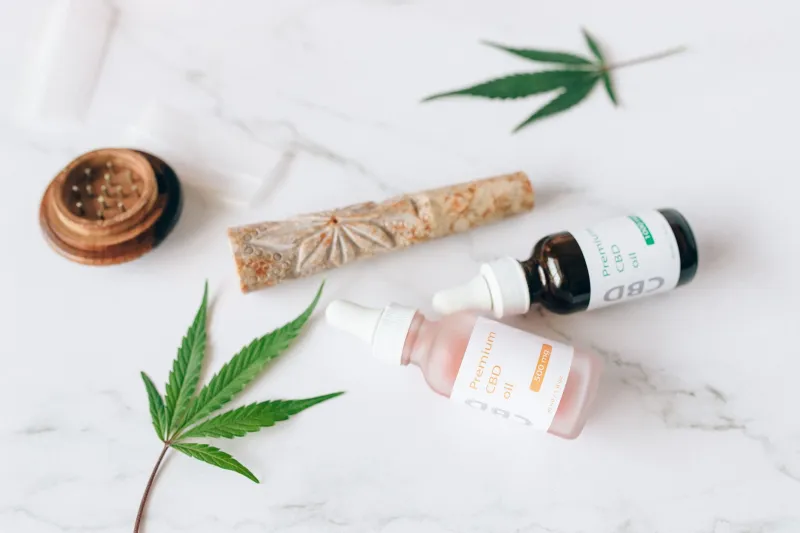
UK CBD aisles are crowded with confident numbers. A 10ml bottle may announce 5%, a 30ml bottle 1,500mg, and a third product 10% with no bottle total at all. The price tags rarely follow the same logic. For buyers, the useful question is not which bottle looks strongest or cheapest, but what each milligram of lab-confirmed cannabinoid costs once fill volume, serving size and batch testing are taken into account. That is the maths many labels leave to the customer.
Start with total cannabinoids, not the headline percentage
A percentage is a concentration, not a quantity. In a CBD oil labelled 5% w/v, that usually means 50mg of CBD per millilitre. In a 10ml bottle, the theoretical total is 500mg. A 10% oil in a 5ml bottle would contain the same 500mg, despite the more impressive percentage. If a label uses w/w rather than w/v, density matters: 5% by weight is not automatically 50mg/ml. For most retail oils, the mg-per-bottle figure or mg/ml figure is the safer starting point. Where only a percentage is given, treat it as incomplete until the fill volume and basis are clear.
The word cannabinoid also matters. Some labels mean CBD only; others mean total cannabinoids, including CBDA, CBG or trace THC. A cost-per-milligram comparison is only fair when both products use the same basis. If one bottle quotes total cannabinoids and another quotes CBD alone, the figures are not directly comparable.
The formula that makes value visible
The core calculation is simple:
Cost per milligram = bottle price ÷ lab-confirmed total cannabinoid content in milligrams.
If you are working from label figures before seeing a certificate of analysis (COA), use:
Cost per milligram = price ÷ (mg per ml × fill volume in ml).
Then multiply by the milligrams in a serving to get cost per serving:
Cost per serving = cost per milligram × milligrams per serving.
That second step is where dropper accuracy and serving instructions become part of the value story. A bottle can look inexpensive per milligram and still be costly per use if the labelled serving is large, or if the dropper delivers more than the buyer expects.
Three worked examples
Consider three hypothetical UK products. Product A is 10ml at 5%, priced at £28. The label implies 500mg. A batch COA confirms 470mg of total cannabinoids. The cost is £28 ÷ 470 = £0.0596 per milligram, or about 6p.
Product B is 30ml at 2.5%, priced at £42. The label implies 750mg; the COA confirms 720mg. The cost is £42 ÷ 720 = £0.0583 per milligram, or about 5.8p. The larger bottle is only marginally better value on a lab-confirmed basis, even though it contains more total cannabinoids.
Product C is 10ml at 10%, priced at £55. The label implies 1,000mg, but the COA confirms 880mg. The cost is £55 ÷ 880 = £0.0625 per milligram, or 6.25p. The highest headline percentage is not the cheapest per milligram. If Product C’s serving is 0.5ml and Product A’s is 0.25ml, the serving-cost gap widens further.
These examples are deliberately ordinary. They show why a ‘high strength’ badge or a large bottle is not, by itself, a value claim. The buyer needs the confirmed total and the price.
Dropper accuracy and serving size
Dropper design is part of the calculation. A marked 1ml dropper is more useful than counting drops, because drop size varies with liquid viscosity, tip design and technique. If a label says ‘four drops’, the buyer should ask how many drops make a millilitre and whether that figure has been verified. A 20-drop-per-millilitre assumption is common, but it is an assumption.
Serving size also changes the meaning of strength. At 50mg/ml, a 1ml serving contains 50mg. At 25mg/ml, the same 1ml serving contains 25mg. If a product recommends 0.5ml, the cost per serving is halved, but so is the cannabinoid intake. Comparing cost per serving without comparing milligrams per serving is another way to be misled.
Use the COA to confirm the maths
A label percentage is a claim; a batch-specific COA is evidence. Look for the batch number that matches the bottle, the laboratory’s accreditation, the cannabinoid profile and the total cannabinoid figure. Check whether the COA reports CBD only or total cannabinoids, and whether CBDA is included. If a product’s label says 1,000mg but the COA confirms 850mg, the true cost per milligram is higher than the shelf talker suggests.
This is not a reason to treat the lowest cost per milligram as automatically best. Testing for pesticides, heavy metals, residual solvents, mycotoxins and microbiological contaminants matters. Provenance matters. But those qualities sit alongside the maths, not instead of it.
A short buyer’s checklist
- Note the bottle price, fill volume and cannabinoid basis.
- Find the mg/ml and total mg figures.
- Match the batch number to a COA.
- Calculate cost per milligram using confirmed potency.
- Calculate cost per serving using the stated serving size.
- Check whether the dropper is marked and how it is used.
- Compare like with like: CBD only against CBD only, total cannabinoids against total cannabinoids.
The arithmetic takes a minute. It is still the quickest way to see through a bottle-size illusion and judge whether a UK CBD oil is genuinely competitive.