The Quiet Decay of Potency: A UK Buyer’s Guide to CBD Storage and Expiry

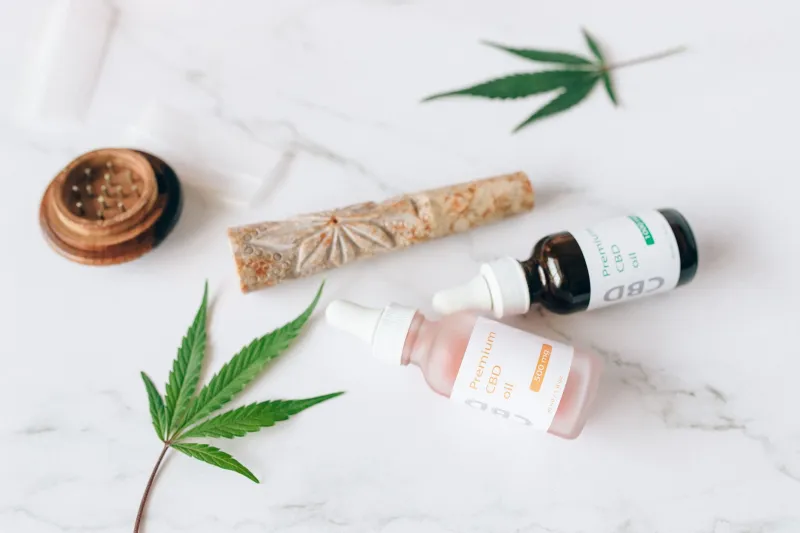
Photo: amber glass CBD oil dropper bottle stored in a dark wooden cupboard, via scientifictimes.org
The Date Is Not the Whole Story
A best-before date on a CBD oil bottle is a compact piece of information, and it is easy to read as a promise. In practice, it is a claim made against a set of assumptions. Manufacturers test stability under controlled conditions, and the resulting shelf life applies to product stored in the manner the brand specifies. Once a bottle leaves that controlled environment, the buyer becomes part of the equation. Light, heat and oxygen do not announce their effects. They work gradually, and the result can be a product that is within its printed date but no longer at its labelled potency.
For UK buyers, this is a practical issue rather than a technical curiosity. CBD oils are often bought in quantities that last several weeks or months, stored in kitchens and bathrooms, and carried in bags. Understanding what accelerates change is the difference between treating an expiry date as a fixed fact and treating it as a conditional claim.
What Changes in a CBD Oil
CBD oil is not a single substance. It typically contains cannabinoids, terpenes and a carrier oil, and each component responds differently to storage conditions. Cannabinoids can oxidise over time, and potency may decline. Terpenes are volatile and can be lost through evaporation or degradation. Carrier oils, particularly unsaturated oils, can become rancid. The visible signs may be subtle: a change in aroma, colour or taste. The invisible change is the one that matters for buyers comparing a bottle’s contents to its certificate of analysis.
None of this means that every bottle deteriorates quickly. It means that the rate of change is influenced by storage, and that an expiry date without storage guidance is an incomplete disclosure.
Light: The Overlooked Accelerant
Ultraviolet and visible light can drive photodegradation in cannabinoids. Amber glass is used for a reason: it reduces light transmission. But amber glass is not a light-proof barrier, and a bottle left on a windowsill or under bright kitchen lighting is receiving more exposure than one kept in a cupboard. Clear glass or plastic packaging offers less protection still. For buyers, the practical lesson is straightforward. Store CBD oil in its original container, in the dark, and avoid decorative display. A shelf that looks good is not necessarily a shelf that preserves potency.
Heat: Kitchens, Cars and Radiators
Heat accelerates chemical reactions, and CBD oil is not exempt. A bottle stored beside a hob, above a fridge or on a radiator shelf is experiencing temperature fluctuations that a stability test may not reflect. Cars are a particular risk in summer, where interior temperatures can rise well above ambient. The same applies to a bottle carried in a bag and left in direct sun. Cool storage is not a marketing suggestion; it is a condition of the shelf-life claim. The ideal is a stable, cool, dark place, and the kitchen counter is rarely it.
Oxygen: The Cost of Opening and Closing
Every time a dropper bottle is opened, air enters. Oxygen contributes to oxidation, and repeated exposure increases the opportunity for change. A bottle that is used daily over several weeks will have a different oxygen exposure profile from one that is opened once. This is why some brands specify a ‘use within’ period after opening, separate from the best-before date. That distinction is useful, because it acknowledges that the clock changes once the seal is broken.
Buyers should also be wary of decanting oil into smaller containers for convenience. Each transfer introduces air and light exposure, and unless the new container is clean, dark and well sealed, the exercise can shorten usable life rather than extend it.
What Expiry Claims Need to Evidence
An expiry date is only as good as the stability work behind it. For UK buyers, the relevant questions are not laboratory-level technicalities; they are questions about disclosure. A brand should be able to explain whether its shelf life is based on real-time stability testing, accelerated testing or a default assumption. It should state the storage conditions under which the date applies. Where a product is marketed on its cannabinoid content, the brand should be able to say whether potency was monitored across the shelf life, not only at release.
This matters because a certificate of analysis at batch release is a snapshot. It confirms the product at a point in time. It does not, by itself, confirm that the product will remain within specification at the end of its stated shelf life. A brand that can summarise its stability approach is demonstrating a more complete form of quality assurance.
A Brand Disclosure Checklist
UK buyers can use the following checklist to assess whether a CBD brand is treating shelf life as a claim that deserves evidence.
- Batch or lot number: The bottle should carry a traceable batch reference.
- Manufacture or batch date: A date of production is more useful than an expiry date alone.
- Best-before date: The date should be legible and linked to the batch.
- Storage instructions: The brand should state the conditions under which the shelf life applies, including temperature and light exposure.
- Post-opening guidance: Where relevant, the brand should state a use-within period after opening.
- Potency at release: The certificate of analysis should confirm cannabinoid content at batch release.
- Stability statement: The brand should be able to explain, in plain terms, how the shelf life was established.
- Packaging rationale: Amber glass or other protective packaging should be explained as a functional choice, not only an aesthetic one.
Simple Storage Mistakes to Avoid
Most storage failures are ordinary rather than exotic. Keeping CBD oil in the bathroom exposes it to heat and humidity fluctuations. Leaving it on a windowsill or a brightly lit shelf increases light exposure. Storing it next to the cooker or on top of a microwave introduces heat. Leaving the cap off between uses, even briefly, increases oxygen exposure and the risk of contamination. Carrying a bottle loose in a bag without its box can lead to light exposure and physical damage. Decanting into an unlabelled container can obscure the batch date and storage guidance.
A simple routine is more effective than a complicated one. Keep the bottle in its original packaging, in a cool dark cupboard, with the cap secured after each use. If the brand provides a box, keep the bottle in it. Read the label before first use and note any post-opening guidance. These are small actions, but they align the buyer’s storage with the conditions under which the shelf life was claimed.
Reading the Label with Realistic Eyes
An expiry date is not a guarantee that a product will be unchanged on the day before it. It is a statement that, under specified conditions, the product is expected to remain within its specification until that date. The buyer’s role is to meet those conditions as far as practicable, and to expect brands to disclose what those conditions are. In the UK CBD market, where quality claims are increasingly scrutinised, shelf-life disclosure is a useful test of whether a brand is thinking about the product after it leaves the production line. The quiet decay of potency is not inevitable, but it is easily assisted by careless storage and incomplete labelling.