CBDA, CBD and the Decarboxylation Question: How UK Buyers Should Read Potency
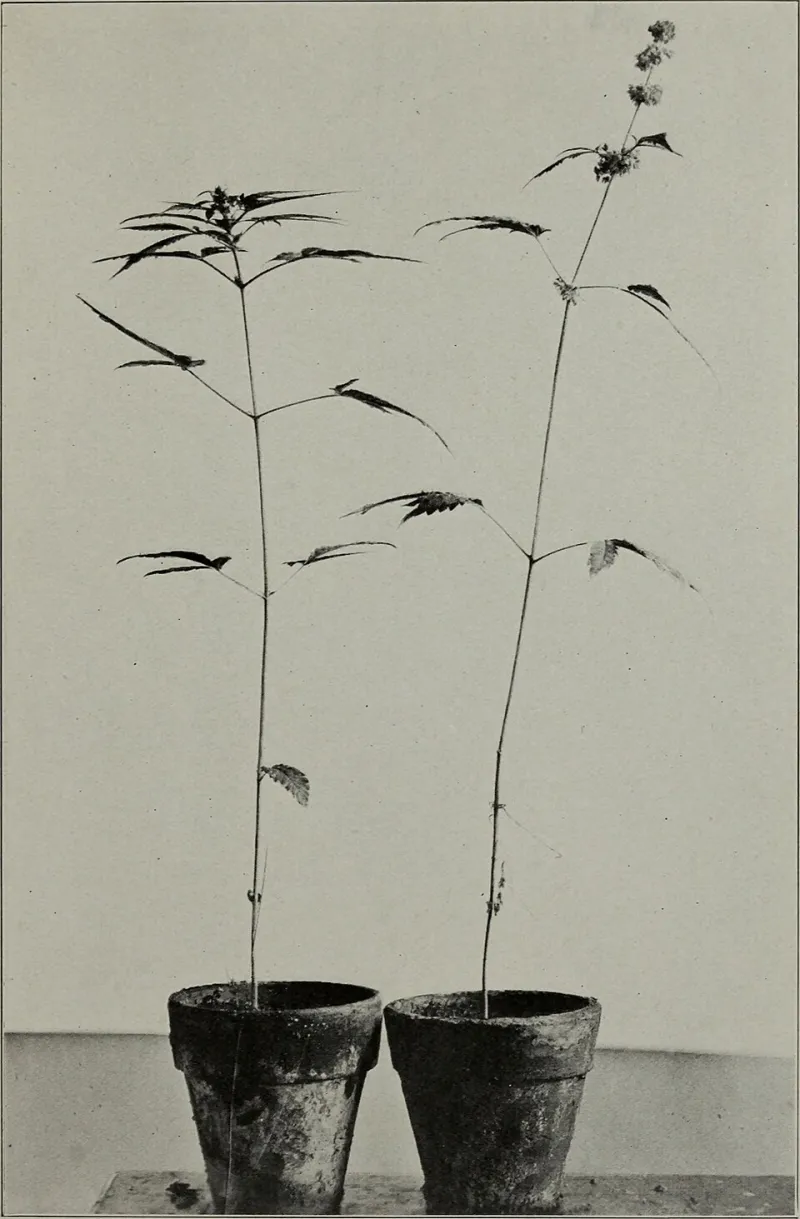
Photo: Bussey Institution, No restrictions, via Wikimedia Commons
Hemp chemistry is often presented as a simple choice between raw and processed. In practice, the distinction between CBDA and CBD is a question of plant chemistry, post-harvest handling and honest labelling. UK buyers who understand the difference are better placed to compare products, interpret laboratory reports and recognise when a potency claim is doing more than the evidence supports.
The acidic precursor and the neutral cannabinoid
In the living hemp plant, many cannabinoids occur in acidic forms. CBDA, or cannabidiolic acid, is the acidic precursor of CBD. It is not a marketing invention and it is not a synthetic by-product. It is part of the plant’s natural chemistry. When hemp material is heated, dried under certain conditions or otherwise processed, a chemical reaction called decarboxylation removes a carboxyl group from CBDA and converts much of it to CBD. This is the same broad process that occurs when hemp is decarbed before infusion or extraction.
Raw hemp extracts, often described as full-spectrum raw or cold-processed, tend to retain a higher proportion of CBDA. Products that have been deliberately heated or decarboxylated tend to contain more CBD and less CBDA. Neither outcome is inherently superior. They are different presentations of hemp material, and the appropriate choice depends on what the product is intended to be and how it is described.
Why UK labels should report both
A label that states only a CBD figure may be incomplete if the product contains meaningful CBDA. A certificate of analysis that reports only total cannabinoids is similarly limited. For a buyer, the useful information is the measured amount of CBDA and the measured amount of CBD, alongside the method used and the batch tested. This is not a demand for excessive technical detail. It is a demand for a clear description of what is in the product.
The distinction matters for comparison. Two products may both claim a similar total cannabinoid content, yet one may be predominantly CBDA and the other predominantly CBD. If a buyer assumes that total cannabinoids equate to CBD, the comparison becomes misleading. The same risk applies when a retailer converts a raw extract claim into an implied CBD potency without explaining the conversion.
Decarboxylation is a process, not a badge
Decarboxylation can be partial or substantial. It can occur during drying, extraction, formulation or a dedicated heating step. A producer may choose a process to achieve a particular cannabinoid profile, but the result should be measured rather than assumed. The presence of some CBD in a raw product does not mean the product was fully decarboxylated, and the presence of some CBDA in a heated product does not mean the process failed. What matters is that the certificate reflects the actual batch.
This is where UK buyers should look closely at language. Terms such as raw, activated, decarbed and full-spectrum are not always used with precision. A product described as raw may have undergone enough heat to convert a portion of its CBDA. A product described as activated may still contain acidic cannabinoids. The laboratory result is more informative than the adjective.
How to compare potency claims without being misled
First, look for separate figures for CBDA and CBD. If only a total is given, ask for the full certificate. Second, check whether the certificate identifies the batch and the sample date. A potency result without a batch link is difficult to apply to the product in hand. Third, compare like with like. A raw extract and a decarboxylated oil are not directly interchangeable on a single CBD number.
Fourth, be cautious with total cannabinoid figures that aggregate many compounds. A high total may reflect cannabinoids other than CBD, or it may be calculated rather than measured. The certificate should show individual results and the method used. Fifth, consider the serving size and the format. A product’s potency claim is only meaningful in relation to the amount a buyer is expected to use, and that information should be stated clearly.
What this means for UK buying decisions
The practical lesson is not that raw is better than decarboxylated, or that CBD is better than CBDA. It is that the product should be described accurately. A UK retailer or producer who understands the chemistry should be able to explain why a product contains the cannabinoid profile it does, and should be willing to supply a certificate that reports CBDA and CBD separately. Buyers should treat a single total cannabinoid figure as a prompt for further questions, not as a complete answer.
In a market where labels can be confident and documentation can be thin, the decarboxylation question is a useful filter. It tests whether a seller knows the difference between plant chemistry and marketing shorthand. For buyers, that distinction is not academic. It is the difference between choosing a product on the basis of evidence and choosing it on the basis of a number that may not mean what it appears to mean.