The Process Behind the Percentage: Auditing Extraction Claims on UK CBD Packaging
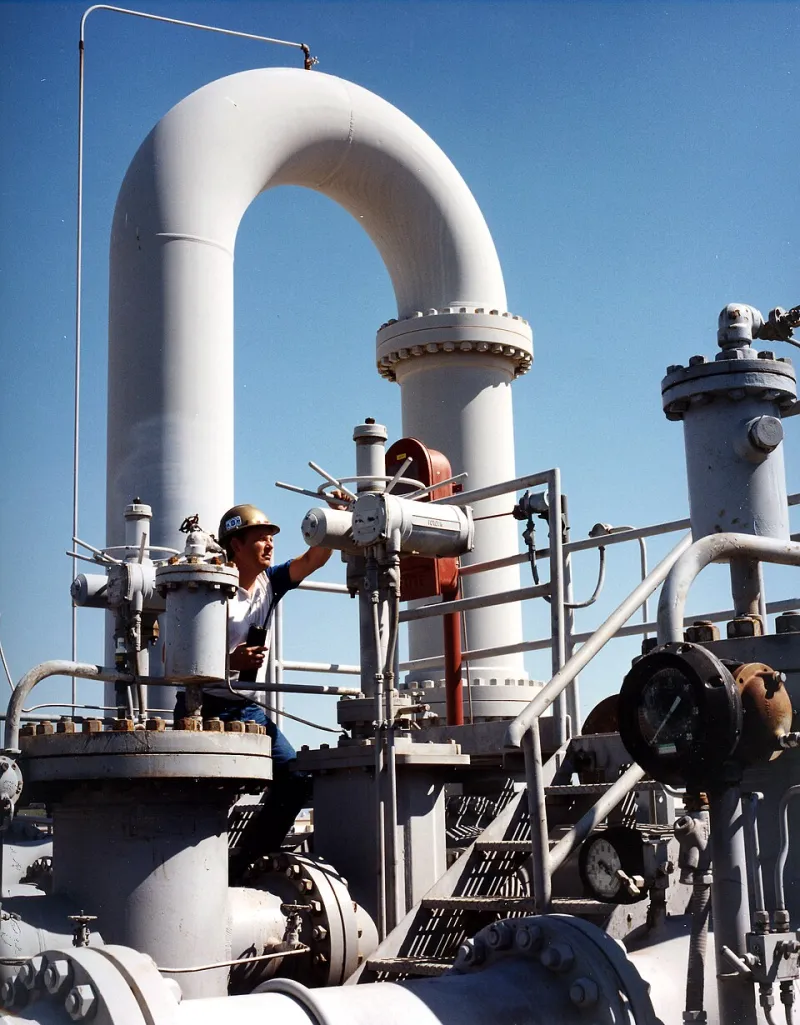
Photo: ENERGY.GOV, Public domain, via Wikimedia Commons
UK CBD packaging has acquired a technical vocabulary of its own. A bottle may announce that it is CO2 extracted, ethanol extracted or solvent-free, often in the same visual space as potency and batch information. For a shopper trying to compare products, these phrases can appear to settle questions about purity and safety. In practice, they answer a narrower question: how the plant material was processed. They do not, by themselves, establish that the finished oil is accurately labelled, free from contaminants or suitable for the buyer’s intended use.
Why extraction language carries so much weight
Hemp contains only a small proportion of cannabinoids by weight, so extraction is the step that concentrates the desired compounds and separates them from plant bulk. Because the process sounds industrial and precise, its terminology is easily recruited as a mark of quality. The difficulty is that a process description is not a specification. Two products may both be described as CO2 extracted while differing in crude versus refined status, cannabinoid profile, purification, carrier oil, batch testing and age. The label term has to be read alongside those other facts, not instead of them.
What supercritical CO2 actually denotes
Supercritical CO2 refers to carbon dioxide held above its critical temperature and pressure, where it behaves as a dense fluid with solvent-like properties. Operators can adjust temperature and pressure to favour different compounds, and the CO2 is later removed. The method is valued because it leaves little or no chemical residue and can be tuned for selectivity. That does, however, make ‘CO2 extracted’ a broad description rather than a guarantee of refinement. A CO2 process may produce a crude extract containing waxes, lipids and pigments, which then requires winterisation, filtration or distillation. It may also be applied to material of variable quality. The extraction route does not tell the buyer whether those later steps were performed well.
Ethanol: a familiar solvent with its own questions
Ethanol extraction uses food-grade alcohol to draw cannabinoids from hemp. It is efficient and well established, and it can be operated at low temperatures to limit the co-extraction of unwanted material. The method is not inherently inferior to CO2, but it places particular weight on solvent removal. A responsible producer will verify that ethanol and any other process solvents have been reduced to acceptable levels, and the finished product should be supported by a residual solvents panel. The presence of the word ‘ethanol’ on a label therefore invites a practical question: what evidence accompanies the claim that the solvent has been adequately removed? Without that evidence, the term is descriptive rather than assuring.
The trouble with ‘solvent-free’
‘Solvent-free’ is among the least stable phrases in CBD retail language. Sometimes it means that no hydrocarbon solvent was used. Sometimes it means that no solvent residue is detectable in the finished product. Sometimes it is used loosely to imply a cleaner process than a competitor’s. CO2 and ethanol are both solvents in the technical sense, so a strict reading of ‘solvent-free’ can be misleading even when the intention is benign. UK buyers should treat the phrase as a claim requiring definition. Which solvents are excluded? Is the claim about the extraction step or the finished batch? Is there a residual solvents certificate of analysis covering the relevant substances? A claim that cannot be tied to a batch and a test method is difficult to audit.
Extraction is not the same as purity
A common buying error is to treat the extraction method as a proxy for overall quality. Purity and safety depend on the whole chain: the starting material, the extraction and purification steps, the carrier oil, the filling environment and the testing regime. A CO2-extracted product can still fail on heavy metals, pesticide residues or microbial limits if the input material or handling is poor. An ethanol-extracted product can be perfectly well controlled when solvent removal and batch testing are rigorous. The useful question is not which process sounds more advanced, but whether the producer can demonstrate control at each stage.
What a COA can and cannot tell you
Certificates of analysis rarely record the extraction method itself. Their value lies in what they report: cannabinoid potency, residual solvents, pesticides, heavy metals, mycotoxins and microbiological results, depending on the panel. A COA should be batch-specific, dated and linked to the product being sold, and the laboratory’s accreditation scope should be checked where the certificate relies on accredited methods. For extraction claims, the most relevant COA section is usually the residual solvents panel. If a product is marketed as ethanol extracted or solvent-free, a residual solvents result is more informative than the marketing phrase. The extraction method may instead be confirmed through a supplier specification, batch record or audit summary. Buyers should be wary of websites that assert a process without offering any route to verify it.
A short glossary for comparing labels
Supercritical CO2: carbon dioxide used above its critical point as an extraction fluid; often associated with low solvent residue, but not a statement of final purity.
Subcritical CO2: CO2 used below its critical point, typically at lower temperature and pressure; another process variant, not a quality grade.
Ethanol extraction: use of food-grade ethanol to extract cannabinoids; requires evidence of solvent removal.
Solvent-free: an ambiguous marketing term that should be defined by the seller and supported by residue testing where relevant.
Crude extract: an early-stage extract that may contain waxes, lipids and other plant material.
Winterisation: a chilling and filtration step used to remove unwanted fats and waxes from an extract.
Distillate: a refined cannabinoid fraction produced through distillation; its quality depends on the starting material and process controls.
Residual solvents: traces of processing solvents that remain in the finished product; these should be tested against a defined limit.
Questions worth putting to a UK supplier
Which extraction method was used for this batch, and can you provide a specification or batch record confirming it? If the product is described as solvent-free, which solvents does that claim refer to? Does the COA include a residual solvents panel for this batch? Was the extract crude, winterised or distilled before formulation? Which laboratory produced the certificate, and is the relevant method within its accreditation scope? These questions are not hostile. They simply move the conversation from adjectives to evidence.
Reading the label in context
Extraction terminology can be useful, but only as one part of a wider evidence trail. UK buyers do not need to become process engineers to compare CBD products sensibly. They need to recognise that ‘CO2’, ‘ethanol’ and ‘solvent-free’ describe different things: a technology, a solvent route and, often, an undefined marketing claim. The finished product still has to be judged on batch-specific testing, clear labelling and a supplier able to answer straightforward questions. A process claim may begin the story, but it should never be allowed to end it.