Before the Beaker: The Sampling Decisions That Shape a UK CBD Certificate

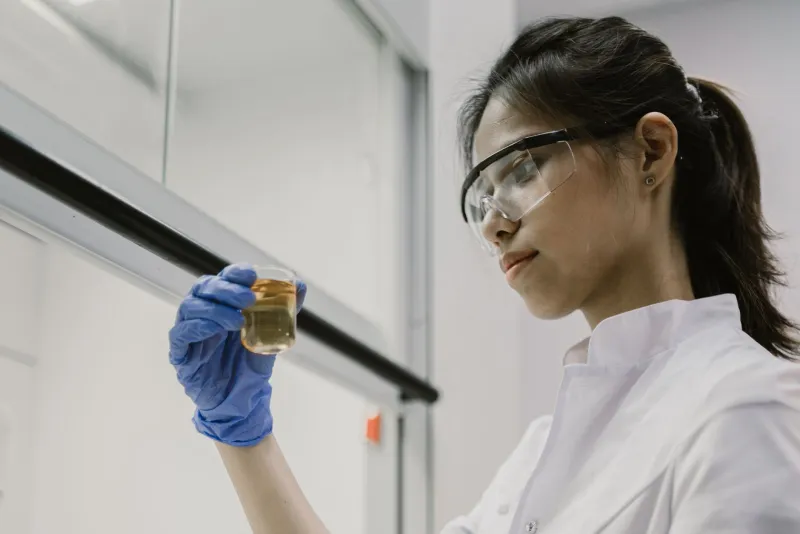
Photo: Jozef020, CC BY-SA 4.0, via Wikimedia Commons
Most CBD buyers in the UK have learned to read a certificate of analysis (COA) with a degree of scepticism. They look for the batch code, the cannabinoid panel, the THC result, the heavy-metal screen and the laboratory’s accreditation. That is prudent. Yet a COA begins with a step that rarely appears on the page: the sample. A laboratory can be meticulous, accredited and transparent, but it can only report on the material placed in front of it. If that material was not representative of the commercial batch, the certificate may be accurate and still misleading.
The laboratory’s limited vantage point
A laboratory does not test a batch; it tests a sample. The distinction sounds academic until it is applied to a retail product. The analytical result is a measurement of the sample, not a guarantee about every unit in a production run. Sampling uncertainty can be larger than the analytical uncertainty reported on the certificate, particularly where a batch is heterogeneous or where the sample is small relative to the volume sold.
This does not undermine laboratory testing. It simply places it in the correct sequence. Sampling comes first, analysis comes second, and interpretation comes third. A buyer who reads only the middle step is missing the two that determine whether the result can be relied upon.
Composite sampling: efficiency and concealment
In a composite sample, increments are drawn from several locations and combined before analysis. This is common in agricultural commodities and can be appropriate for bulk hemp material. It gives an average picture and reduces analytical cost. But an average can hide variation. If one part of a batch has elevated THC or a microbial issue, combining it with clean material can dilute the result below a threshold. That does not make the batch safe; it makes the result less informative about the affected portion.
Composite sampling is not inherently bad. It becomes a problem when it is used without a plan that controls heterogeneity. A supplier should be able to explain why a composite was chosen, how many increments were taken, and whether any part of the batch was sampled separately because it was considered higher risk.
Random and stratified sampling
Random sampling gives each unit a known chance of selection. In practice, stratified random sampling is more useful for CBD production. The batch is divided by production line, day, vessel or raw-material lot, and samples are drawn within each stratum. This allows the laboratory result to reflect the structure of the batch rather than the convenience of the person holding the scoop.
A handful of samples taken from the top of a drum is not random. Nor is a sample taken only from the most accessible retail units. Selection bias is easy to introduce and difficult to detect from a COA alone. The sampling record, not the certificate, is where bias is either controlled or exposed.
When batch size and sample size diverge
One recurring weakness is a mismatch between the batch described on the COA and the batch sold. A certificate may refer to a small development batch while retail stock comes from a much larger production run. Or a supplier may test a single finished bottle and apply the result to thousands. The batch code may match, but the sampling basis does not.
UK buyers should ask for the batch size stated on the COA and the sampling rationale behind it. A small jar cannot represent an arbitrarily large batch without a documented statistical or operational basis. Where a production run is split into sub-batches, each sub-batch should be identified and tested, or the supplier should explain why a single result is sufficient.
Homogeneity, matrix and the limits of a jar
CBD products are not all alike. A tincture in MCT oil, a viscous full-spectrum extract, a powder and a capsule each present different sampling challenges. Viscous materials may need warming and mixing; powders may segregate; oils may separate. If the sample is taken without homogenisation, the cannabinoid result may reflect the aliquot rather than the container.
For finished units, testing individual bottles can show unit-to-unit variation. A composite of several bottles can estimate an average but not the worst case. The choice depends on the question being asked. A buyer concerned with consistency should want evidence that the sampling plan addresses variation, not merely that the mean result is acceptable.
Chain of custody and the paper trail
A sample is only as trustworthy as its handling. The sampling record should identify who took the sample, when and where it was taken, which containers or retail units were sampled, and how the sample was sealed. The laboratory should record the condition of the sample on receipt. If the seal was broken or storage conditions were uncontrolled, the integrity of the result is open to question.
A COA without a sampling record is an analytical result, not a provenance document. In the UK context, where accreditation to ISO/IEC 17025 is often cited, buyers should also check that the relevant test falls within the laboratory’s accredited scope. Accreditation supports competence; it does not by itself confirm that the sample was representative.
Questions to put to a UK supplier
- Does the COA state the batch code, batch size and sample receipt date?
- Is there a documented sampling plan, and can it be shared?
- Was the sample composite, random or stratified random?
- How many containers or retail units were sampled, and at what stage of production?
- Was the sample taken from bulk material or from finished bottles?
- Who took the sample, and is there a chain-of-custody record?
- Was the material homogenised before subsampling?
- If a retest was carried out, was it the same retained sample or a new one?
- Are sub-batches separately identified and tested?
What a clean COA can still tell you
None of this means clean COAs are worthless. It means they have a scope. A COA can confirm that the sample tested was below specified limits for the analytes covered, using the methods stated. It can support consistency when sampling is repeated across batches. It becomes stronger when the supplier can connect the retail bottle to the laboratory sample and the sample to a documented plan.
In the UK market, where lab-tested is a common claim, the differentiator is not the presence of a certificate but the rigour behind the sample. Buyers who ask about sampling are not questioning the laboratory’s competence. They are asking whether the certificate speaks for the product they are about to buy.
The sample jar is not a detail. It is the point at which a commercial batch becomes a laboratory result. Treat it as evidence in its own right, and a COA becomes more than a clean page: it becomes a defensible account of what was tested.